Padel is a racket sport that combines elements of tennis and squash. Played on an enclosed court about one-third the size of a tennis court, padel is easier to pick up than tennis, more social by nature, and wildly addictive. It's the fastest growing sport in the world, with over 25 million active players globally.
How Padel Works
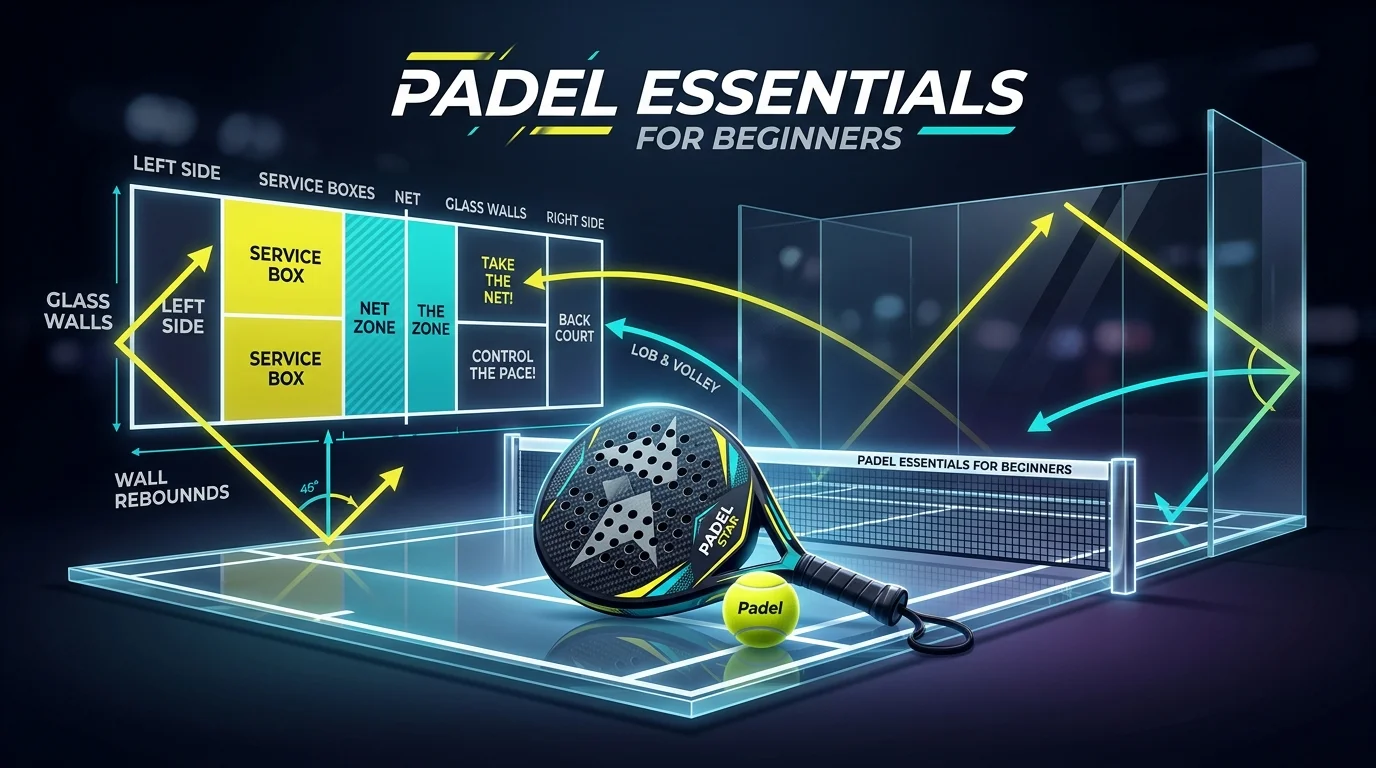
Padel is always played in doubles (2 vs 2) on an enclosed court surrounded by glass walls and metal fencing. The court is 20m x 10m — roughly one-third the size of a tennis court.
The Basics
- Serve: Underhand only. The ball must bounce once before being hit below waist height.
- Walls: The ball can bounce off the glass walls on your side, similar to squash. You can play the ball off the back wall after it bounces on the ground.
- Scoring: Same as tennis — 15, 30, 40, game. Sets to 6 with a 2-game margin, tiebreak at 6-6. Read our full overview of padel tournament rules for tournament formats and court etiquette.
- Net: The ball must clear the net and bounce in the opponent's court before they can play it. After the bounce, it can hit any wall.
Why Is Padel So Popular?
1. Easy to Learn
Unlike tennis, where the serve alone takes months to develop, padel's underhand serve means you can start having rallies from day one. The smaller court size means less running, and the walls keep the ball in play longer, creating exciting extended rallies.
2. Social by Design
Because padel is always doubles, it's inherently social. The compact court puts all four players close together, making conversation and banter natural parts of the experience. It's as much a social activity as a sport.
3. Great Exercise Without the Strain
Padel provides excellent cardiovascular exercise with lower impact on joints compared to tennis. The shorter distance to cover and the slower ball speed reduce the risk of injury while still providing an intense workout.
4. All Ages and Levels
Padel is genuinely accessible to players of all ages. Children, adults, and seniors can play comfortably, and mixed-skill matches are more competitive than in tennis due to the smaller court and wall play mechanics.
Equipment You Need
- Padel racket: Solid (no strings), made of carbon fiber or fiberglass, with holes for aerodynamics. Costs €50–€300 depending on the level.
- Padel balls: Similar to tennis balls but with slightly less pressure. Most courts provide these.
- Sports shoes: Indoor or clay court shoes with lateral support. Tennis shoes work fine.
- Comfortable sportswear: No specific requirements.
The Padel Court
A padel court has:
- Glass back walls (about 4m high) — the ball can be played off these
- Metal fencing on the sides (above a glass section) — the ball can also be played off the lower glass sections
- A net in the center, slightly lower than a tennis net (88cm at center, 92cm at posts)
- Service boxes on each side, marked like tennis
- Artificial turf or concrete surface — most outdoor courts use artificial turf with sand
How to Start Playing Padel
- Find a local court: Search for padel clubs or sports facilities near you. The sport is growing rapidly, with new courts opening constantly.
- Rent equipment: Most clubs rent rackets if you don't have your own. Start with a rented racket before investing.
- Take a beginner lesson: One or two group lessons will teach you the fundamentals — serve, forehand, backhand, and wall play.
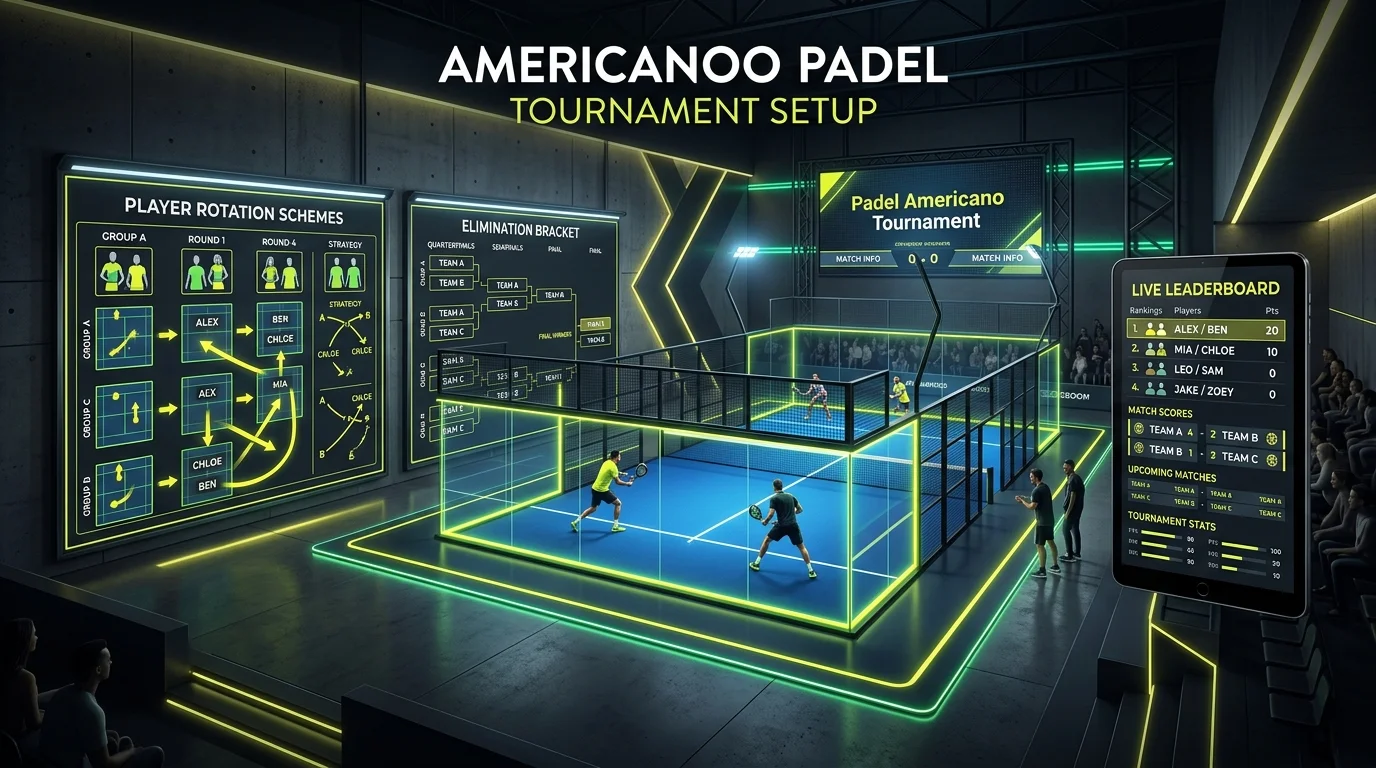
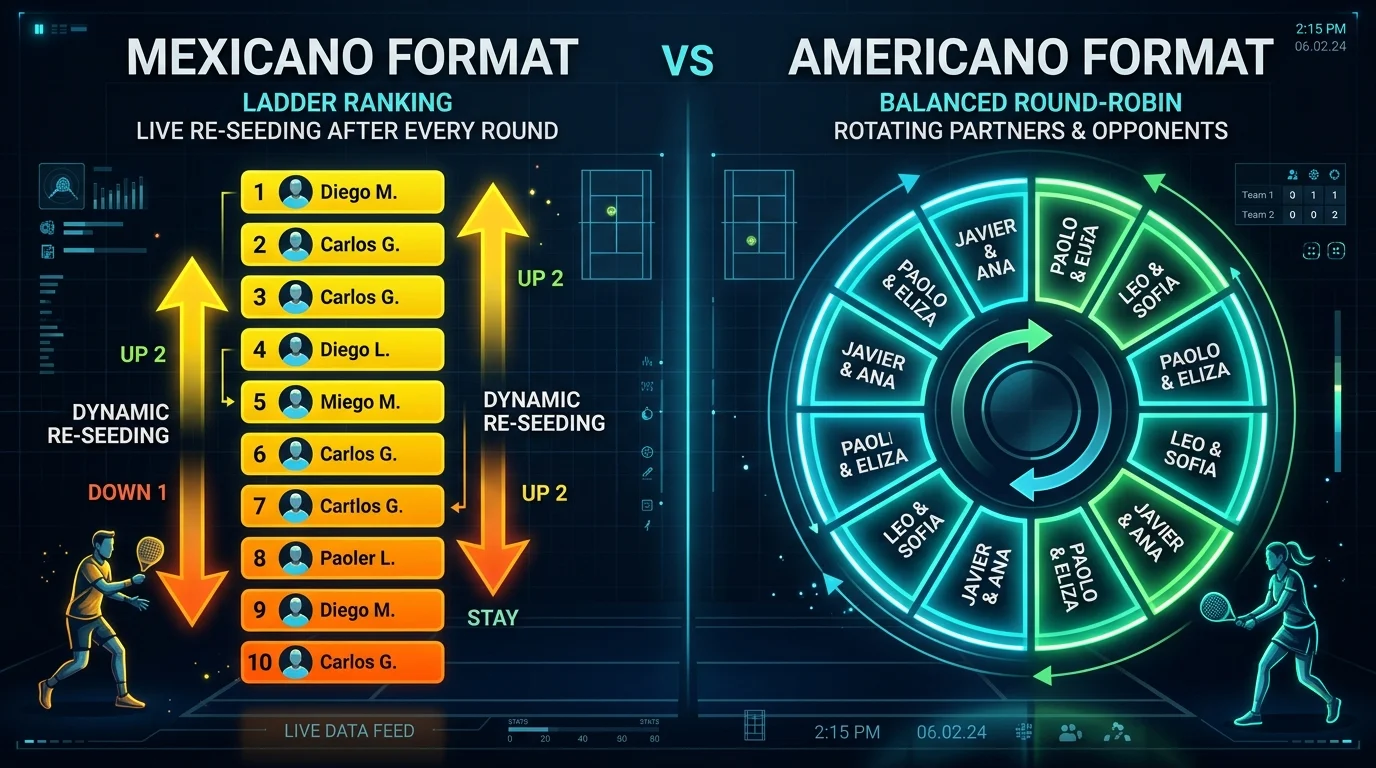
- Join social play: Many clubs organize social tournaments for mixed-level groups — here is how to prepare for your first Americano tournament.
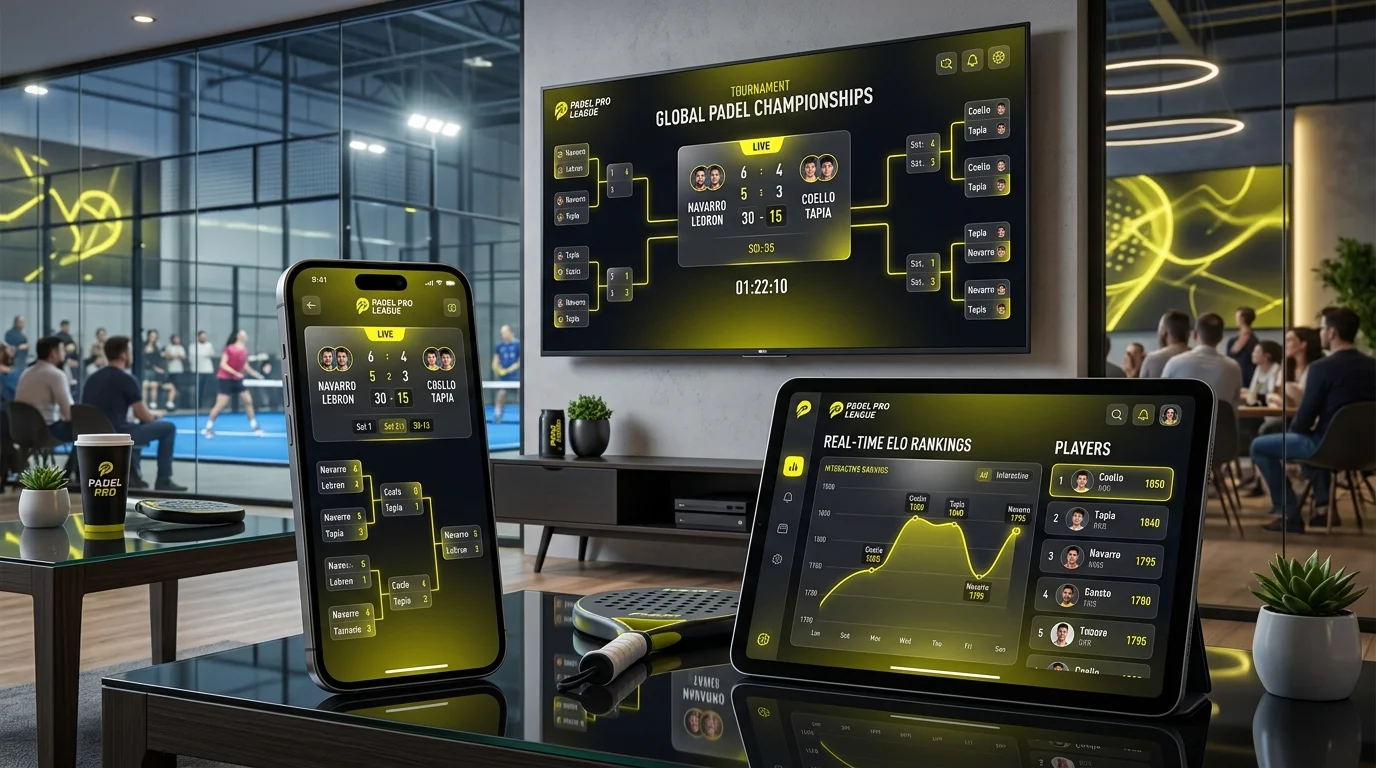
- Download a tournament app: Use an app like Banana Padel to join or organize tournaments, track your Elo rating, and connect with other players.
Padel vs Tennis: Key Differences
| Feature | Padel | Tennis |
|---|---|---|
| Court size | 20m x 10m (enclosed) | 23.77m x 10.97m (open) |
| Players | Always doubles | Singles or doubles |
| Serve | Underhand | Overhand |
| Walls | Ball can be played off walls | No walls |
| Racket | Solid, no strings | Strings |
| Difficulty | Easy to pick up | Steeper learning curve |
| Scoring | Same as tennis | Standard scoring |
Join the Padel Community
Padel's greatest strength is its community. The sport thrives on social play, local clubs, and friendly tournaments. Whether you're looking for casual games or competitive leagues, there's a place for you.
Banana Padel makes it easy to organize and join tournaments, connect with players, and track your improvement with an Elo rating system. It's the perfect companion for your padel journey, from your very first tournament to your hundredth.
Frequently Asked Questions
How is padel different from tennis?
Padel is played in an enclosed glass court about a third of the size of a tennis court. It is played exclusively in doubles using solid composite rackets without strings, features underhand serves, and allows hitting balls off the glass walls.
Can absolute beginners play padel immediately?
Yes! Because the serve is underhand and the court is compact, players without any racket sport experience can enjoy continuous, exciting rallies from their very first hour.
Can the ball hit the glass wall directly in padel?
No. When an opponent hits the ball over the net, it must bounce on the turf court floor once before hitting your glass wall or fence. Once it has bounced, you can hit it directly or after it rebounds off the glass.
What gear do I need to start playing padel?
You only need comfortable sportswear, padel or clay-court tennis shoes with good grip (herringbone tread), and a padel racket with low-compression padel balls (which almost all clubs rent for beginners).
Can padel be played singles (1 on 1)?
Official padel matches and tournaments are doubles-only (2 vs 2). While some clubs have dedicated narrow singles courts for practice drills, standard courts are designed specifically for 4 players.

Padel Academy Coach
Former competitive padel player, head of junior padel development
View all guides by Miguel SilvaTry Banana Padel for Free
Create and manage Americano & Mexicano tournaments with automatic rotation, live scoreboards, and Elo ratings. No subscription required.